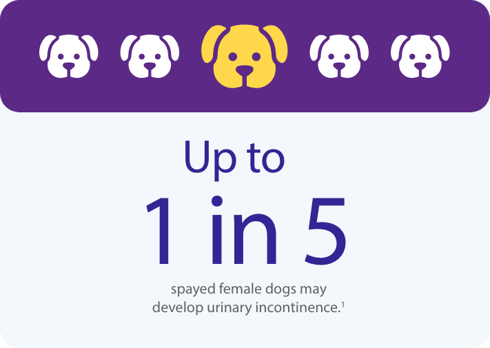
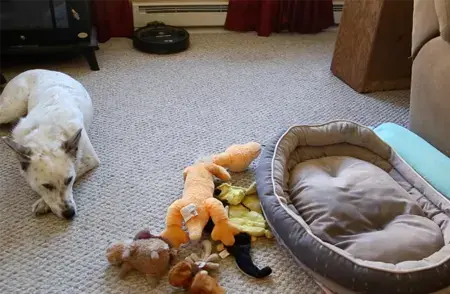
Inappropriate urination is a common problem for dogs, especially as they age. Spayed female dogs tend to be more prone to urinary incontinence. Urinary incontinence (UI) due to urethral sphincter hypotonus causes dogs to urinate uncontrollably while they are sleeping or resting, which can cause worry for both dogs and their owners.
Signs of urinary incontinence include:
Dripping, leaking urine
Wet spots where dog sleeps
Excessive licking of genitals
Red, irritated skin in the genital area
Inappropriate urination indoors
1Kendall A, et al. ACVIM consensus statement on diagnosis and management of urinary incontinence in dogs. J Vet Intern Med. 2024.
Medical or behavioral?
In most cases, repeated accidents should prompt a veterinarian visit. To help you narrow down whether your dog is misbehaving or has a medical issue, click through the four scenarios below.
Wets when relaxed or asleep Usually unaware of soiling
Possible Problem Urinary Incontinence – Medical
Causes Weakened muscles of the urethral sphincter
Most Commonly Seen In
Middle-aged and older spayed females
More common in mid-sized and larger breeds
Possible Treatment
Ask your veterinarian about PROIN ER™ (phenylpropanolamine hydrochloride extended-release tablets), an FDA-approved tablet
Voids small amounts of urine frequently
Possible Problem Frequent urination – Behavioral or medical
Causes
Urinary tract infection
Urinary stones
Diabetes
Kidney disease
Prostate disorders
Some medications
Most Commonly Seen In
Can occur in dogs of all ages and breeds
Some breeds are more susceptible to certain conditions than others
Possible Treatment
Varies based on condition
Urinates during greetings, play, physical contact or scolding Passes small amounts when upset or in stressful situations
Possible Problem Submissive urination – Behavioral
Causes
Anxiety
Excitement
Most Commonly Seen In
Puppies
Adult dogs, especially those who lack confidence
Possible Treatment
Puppies will likely outgrow the condition
Reduce stress
Teach the dog to ask to go outside
Consider contacting a dog trainer or canine behaviorist
Urinates small amounts on vertical surfaces, though may also occur on horizontal surfaces
Possible Problem Urine Marking – Behavioral
Causes
Anxiety
Social/territorial triggers
Nonresident dogs in their environment
Most Commonly Seen In
Males and females of all ages and breeds
Reproductively intact dogs
Possible Treatment
Neuter or spay your dog
Thoroughly clean previously marked locations
Restrict access to things the dog is likely to mark
Consider contacting a dog trainer or canine behaviorist
Who’s to blame for repeated accidents?
Additional Resources
Urinary health issues
Urinary problems can happen due to both medical and behavioral issues. Understanding the cause of urinary incontinence is an important step in finding the right treatment.
This video addresses urinary incontinence and its treatment in female spayed dogs. Hear firsthand from pet owners who are experiencing a better relationship with their dogs.
Senior dogs with abnormal urinary tract signs require full diagnostic and clinical attention. This article discusses some of the issues, such as periuria, polyuria, orthopedic or neurologic, and cognition as well as the steps in properly diagnosing such issues in senior dogs.
This article focuses on two of the most common causes of urinary incontinence, including urethral sphincter mechanism incompetence (USMI), and functional urethral obstruction or detrusor urethral dyssynergia (DUD).
Author: Julie Byron, DVM, MS, DACVIM, The Ohio State University, College of Veterinary Medicine
Since urinary incontinence may be new to you, here’s a helpful list of questions your veterinarian may ask to help in the diagnosis (along with performing tests like urine culture, blood tests, abdominal imaging, or ultrasound). Answering these questions before the first appointment could be the first step in managing your dog’s leaking issues.